
They said you shouldn’t wake the kid lying face‑down at the back of the study room
If you walk a little down from the intersection in front of the school, there’s an old study room.
These days people go to study cafés more often, but that study room is still there. The sign’s light is dim, and the stairs smell like old rubber. When you enter, there’s a small reception desk next to the shoe rack, and a crooked piece of paper on the wall that says “Quiet.”
During exam season, the seats fill up quickly.
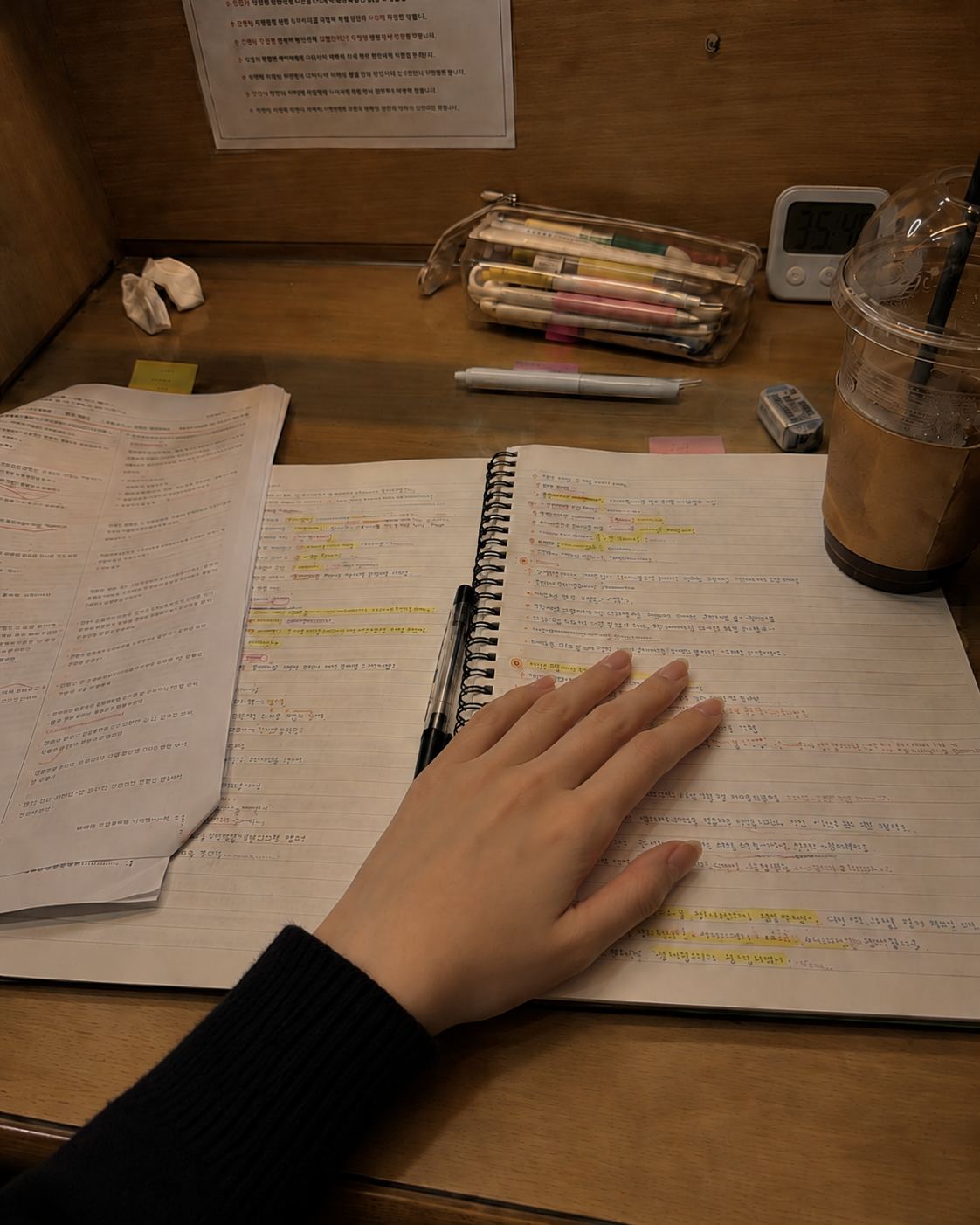
On the desks are highlighters, wrong‑answer notebooks, half‑finished coffee, and folded printouts. If someone drags a chair even slightly, people around them lift their heads. When a phone vibrates once, even if it’s not yours, you instinctively check your screen.
At the very back of that study room is the last seat.
There’s no window, and it’s pressed against the wall, so you can’t see it well from the entrance. You have to turn the corner at the end of the hallway to reach it. It’s the kind of spot quiet kids might choose, but students from our school rarely pick that seat.
In the literature club notebook, it was written like this:
“Back seat of the study room. If the desk lamp is on, don’t sit there.”
Below that, in smaller handwriting:
“Don’t wake the kid lying face‑down.